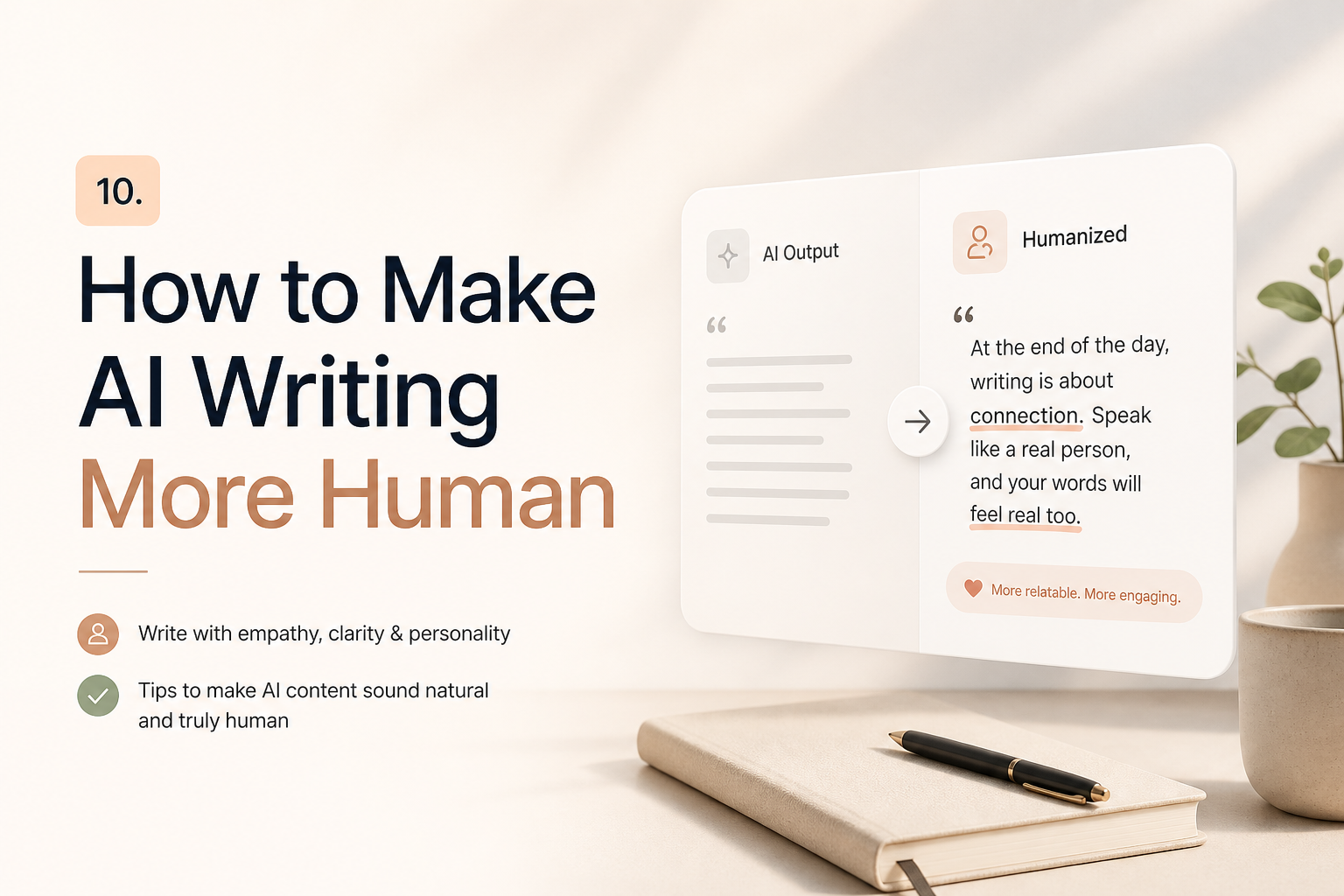
How do I make AI writing sound less robotic fast?
Start by cutting filler, shortening long sentences, then swapping vague verbs for specific ones. Read the draft out loud, then rewrite any line that sounds like a product manual instead of a real person.
What prompt should I use to make AI writing sound human?
Tell the model who is speaking, who is reading, plus what tone you want in plain language. For example, ask for a warm, direct answer with short sentences, concrete examples, plus no corporate jargon.
Why does AI writing feel unnatural even when the facts are right?
It often sounds flat because it overuses patterns, repeats ideas, then piles on generic transitions. The fix is to add point of view, small specifics, plus a few sentence lengths that vary naturally.
How can I edit AI text to sound more like me?
Replace broad claims with details you would actually say, then add your preferred words, phrases, plus rhythm. If you always write in a direct style, delete anything that sounds overly polished or inflated.
What words should I remove from AI writing to make it feel human?
Cut phrases like “in today’s fast-paced world,” “delve into,” plus “unlock the potential.” These lines make copy sound filtered through a template, not a person with a clear opinion.
How do I keep AI writing human without making it messy?
Keep the structure clean, then add a few human touches like a plain example, a brief aside, or a practical warning. The goal is not to sound random, just specific enough that a reader can tell a person shaped the draft.
Is it better to ask AI for casual tone or conversational tone?
Conversational usually works better because it focuses on how people actually speak, not just how they sound in a chatty email. If needed, pair it with extra instructions like “avoid hype” plus “use short paragraphs.”
How do I make AI blog posts sound like a real expert wrote them?
Give the model a narrow angle, then ask for clear tradeoffs, realistic examples, plus direct recommendations. Expert writing usually feels human because it is decisive, not because it uses fancier vocabulary.
What is the easiest way to humanize AI emails before sending them?
Read each email once from the recipient’s point of view, then trim anything that feels polished but empty. Add one detail that shows context, like a shared deadline, a past conversation, or a specific next step.
Can I make AI writing more human without changing the whole draft?
Yes, often you only need to rewrite the opening, the transitions, plus the last line. Those sections shape the tone most, so a few targeted edits can change the whole feel of the piece.
How do I stop AI from sounding too formal?
Ask for plain English, then remove stacked nouns, stiff transitions, plus overly complete explanations. If a sentence sounds like it belongs in a policy memo, break it into two simpler lines.
What is the best AI writing style for SEO without sounding fake?
Use a clear structure, answer the search intent quickly, then write like you are helping a person solve one problem. You can still include keywords, just keep them natural enough that the page reads smoothly out loud.
How do I humanize AI content for social media captions?
Make the first line feel like a real thought, then keep the caption tight with one idea per post. A useful trick is to write the caption as if you were texting a coworker, then polish only the awkward parts.
Should I tell AI to use contractions when I want human writing?
Usually, yes. Contractions like “you’re,” “it’s,” plus “don’t” help the copy sound less stiff, especially in marketing, email, or blog drafts.
What are good alternatives to AI generated text that still save time?
Try a hybrid workflow where AI creates an outline, then you write the intro, examples, plus final polish yourself. You can also reuse your own past writing as a style reference instead of starting from a blank prompt.
How do I know when AI writing is human enough to publish?
Check whether a real reader could tell who wrote it, what point it is making, plus why it matters now. If the answer feels generic after one careful read, it needs another pass with stronger specifics and a more natural voice.